Sewn Into Sovereignty: How Transgender Pageant Competitors Are Mastering the Art of the Perfect Fit
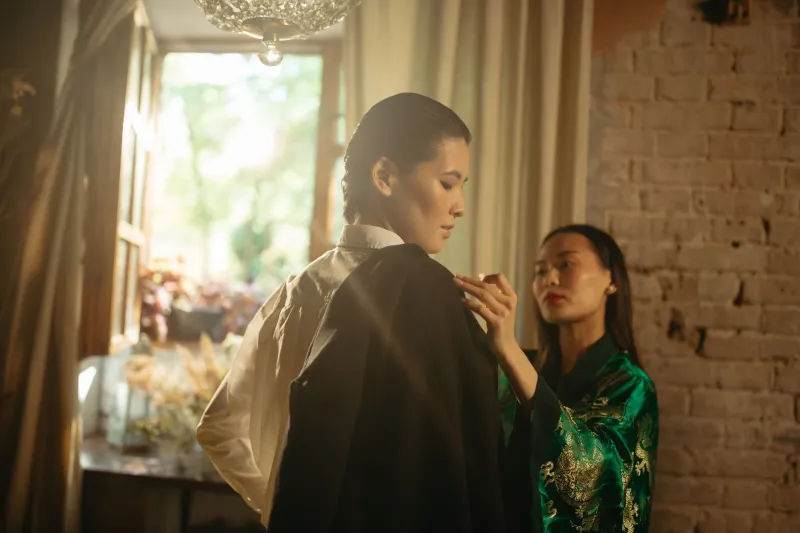
There is a moment every pageant competitor knows intimately: the one where you stand in front of a full-length mirror, gown in hand, and the garment either becomes an extension of your identity or a reminder of every way the mainstream fashion industry has failed to account for you. For transgender competitors entering the world of pageantry, that moment carries an additional weight—one that is equal parts frustration and fierce determination.
The good news? The transgender pageant community has responded to that challenge not with resignation, but with extraordinary ingenuity.
The Problem With Off-the-Rack
Conventional pageant fashion—whether sourced from bridal boutiques in Atlanta, evening wear retailers in Los Angeles, or online marketplaces shipping from New York—is almost universally designed around a single body template. Narrow shoulders, wider hips, a defined waist: the architecture of mainstream formalwear assumes a particular silhouette that does not reflect the remarkable diversity of trans women's bodies.
For many competitors, the challenges are specific and practical. Broader shoulder widths can cause structured bodices to gap or pull. Hip-to-waist ratios that differ from cisgender averages mean that what fits through the torso may not zip at the hips—or vice versa. Longer torso lengths, higher waistlines, and differences in chest construction all create fitting puzzles that a standard size chart simply cannot solve.
"I have ordered gowns in my size and had them arrive looking nothing like they did on the model," says one competitor who has placed in multiple regional competitions across the Southeast. "The industry just isn't built with us in mind. So we build it ourselves."
Finding Your Fit: A Strategic Approach
Experienced competitors emphasize that successful pageant dressing begins not at the boutique, but at the measuring tape. Before purchasing anything, a thorough set of body measurements—shoulders, chest, underbust, natural waist, high hip, full hip, and inseam—creates a personal reference document that becomes invaluable when comparing against designer size charts or communicating with custom dressmakers.
Several competitors recommend working with a trusted seamstress or tailor early in the preparation process, ideally someone with experience in formalwear construction and, where possible, familiarity with trans clients. Cities with active LGBTQ+ communities—Chicago, Houston, Miami, San Francisco, and New York among them—often have alteration specialists who have developed genuine expertise in this area.
For those working with tighter budgets, a different strategy proves equally effective: purchasing a gown one or two sizes larger than the measurement chart suggests, then investing in professional tailoring to bring the garment in precisely where needed. The cost of quality alterations is almost always lower than the cost of a custom-built gown from scratch, and the results, when executed by a skilled hand, can be indistinguishable.
The Rise of Trans-Inclusive Designers
Perhaps the most encouraging development in pageant fashion over the past several years has been the emergence of designers who build their entire aesthetic around trans women's bodies rather than treating them as an afterthought.
A growing number of independent couturiers—many of them trans women themselves, or designers with deep ties to the community—are now creating competition-ready looks that account for the full spectrum of trans bodies from the first sketch. Their work is not remedial. It is not about "fixing" a problem. It is about designing with intention for a clientele that has historically been rendered invisible by the industry.
These designers often work directly with competitors during the preparation cycle, conducting virtual or in-person fittings, discussing the specific demands of stage lighting and movement, and advising on construction techniques—internal boning, strategic ruching, custom-cut panels—that create the silhouette a competitor envisions without sacrificing comfort or mobility during the grueling demands of competition day.
"When someone comes to me for a competition gown, I'm not just making a dress," explains one New York-based designer who has outfitted competitors in multiple national trans pageants. "I'm making an instrument. It has to perform."
Beyond the Gown: Interview and Activewear Challenges
While the evening gown category commands the most visible attention, the wardrobe demands of pageant competition extend well beyond a single look. Interview attire, activewear or swimwear segments, and casual presentation rounds each present their own fitting complexities.
For the interview portion—often conducted before a panel of judges in a formal setting—competitors emphasize the importance of structured tailoring that reads as polished and authoritative. Blazers and structured suits, which have become increasingly popular as interview looks in contemporary pageantry, present specific challenges around shoulder construction and chest fit that require the same careful measurement approach applied to evening gowns.
Activewear and swimwear segments require additional consideration around compression garments, padding, and the interaction between foundation wear and the outer garment. Many experienced competitors develop a layering system—carefully chosen shapewear, padding inserts, and foundation garments—that works harmoniously with their competition looks rather than fighting against them.
The Psychology of a Perfect Fit
What experienced competitors and designers return to again and again in conversation is not merely the technical challenge of construction. It is the psychological transformation that occurs when a garment truly fits.
For transgender women, clothing that honors the body—that was built for it, that moves with it, that reflects the person wearing it—carries a significance that extends far beyond aesthetics. In a culture that has historically told trans women their bodies are problems to be solved, wearing a gown that fits perfectly is an act of sovereignty.
"When I put on a look that actually works for my body, something shifts," says one competitor who has competed at both regional and national levels. "I stop thinking about the dress. I start thinking about the stage. That's when you're ready to compete."
This psychological readiness is not incidental to performance—it is foundational to it. Judges read confidence. Audiences feel it. And that confidence, competitors and coaches agree, is almost impossible to manufacture when a competitor is distracted by a gown that gaps, pulls, or refuses to move naturally.
Practical Resources for Competitors
For those preparing for their first or next competition, the transgender pageant community has developed a robust informal network of knowledge-sharing. Online communities on platforms including Facebook and Reddit host active groups where competitors exchange recommendations for trans-friendly designers, alteration specialists, and online retailers with generous return policies.
Several national pageant organizations have also begun maintaining curated vendor lists—connecting competitors with designers and tailors who have demonstrated both skill and cultural competence in working with trans clients.
The investment in proper wardrobe preparation—whether measured in time, money, or both—is, by every account from those who have walked the stage, worth every moment of effort. Because when the spotlight finds you and the music rises, the only thing that should be on your mind is the crown.
And you deserve to walk toward it in something that was made for exactly who you are.