Walk Like You Mean It: The Science and Soul of Stage Presence in Transgender Pageantry
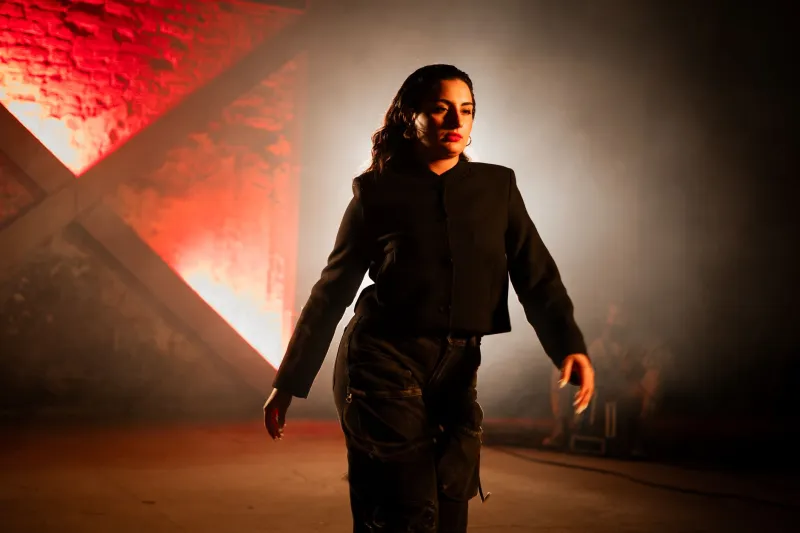
There is a moment — every seasoned pageant audience member knows it — when a competitor steps into the light and the entire room shifts. Conversations stop. Phones lower. The air itself seems to reorganize around a single human being moving with total, unshakeable intention. That moment is not accidental. It is engineered, rehearsed, and deeply felt.
For transgender pageant competitors across the United States, the development of stage presence has become one of the most sophisticated and personally meaningful dimensions of competition preparation. It is, for many, far more than a performance skill. It is the physical language through which identity, resilience, and joy are communicated to the world.
Beyond the Walk: What Stage Presence Actually Means
Ask ten pageant coaches to define stage presence and you will receive ten different answers — yet all of them will circle the same essential truth. "Presence is not about how you look," says Miami-based choreographer and pageant consultant Valentina Cruz, who has worked with transgender competitors at regional and national levels for over a decade. "Presence is about how completely you occupy your own body. When a competitor is fully in herself — not performing herself, but actually being herself — the audience has no choice but to follow."
This distinction between performing and being is foundational to the coaching philosophy that many top-tier transgender pageant directors now employ. The runway walk, the evening gown turn, the talent stage cross — each of these is a vessel. What fills that vessel determines whether a competitor is merely seen or genuinely remembered.
Body language researchers have long documented that nonverbal communication accounts for the overwhelming majority of how human beings perceive one another in real time. For pageant competitors, this science translates into an almost athletic approach to physical self-mastery. Posture, gaze direction, the angle of a shoulder, the deliberate placement of a hand — each element is studied, refined, and ultimately internalized until it no longer feels like technique but like self.
The Coaching Room: Where Transformation Begins
Across the country, a growing network of choreographers, movement coaches, and pageant directors are developing specialized methodologies for working with transgender competitors — approaches that honor the unique relationship many trans women and nonbinary individuals have with their bodies.
"The work we do in the coaching room is never just about the stage," explains New York-based movement director Dominique Hargrove, whose client roster includes several Miss Trans Star International competitors. "We are working with women who have often spent years learning to move through the world in ways that minimized them. Our job is to reverse that — to help them take up space with pride and with precision."
Hargrove's methodology begins not with the runway but with stillness. Competitors are taught to stand — simply to stand — with full awareness of every point of contact between their body and the floor. From that grounded foundation, movement is introduced gradually: the slow extension of an arm, the deliberate shift of weight from one hip to the other, the controlled pivot that transforms a simple turn into a statement.
Breath work, borrowed in part from theatrical training traditions, plays a central role in many coaching programs. Shallow, anxious breathing collapses the chest and disrupts posture; deep, diaphragmatic breathing opens the torso, elevates the sternum, and projects a quality of calm authority that audiences register immediately, even if they cannot name what they are responding to.
The Runway as Personal Narrative
For transgender competitors, the pageant runway carries a weight of meaning that extends well beyond competitive scoring. Many describe their walk as a declaration — a public, embodied assertion of identity that no judging panel can fully quantify.
Savannah Monroe, a 2023 regional titleholder from Atlanta who has since competed at the national level, describes her relationship with her runway walk as one of the most transformative aspects of her pageant journey. "I came into my first competition thinking the walk was the least important part," she recalls. "By the time I was done training, I understood that the walk is the message. Every step I take on that stage is me saying: I am here, I am real, and I am not apologizing for a single inch of it."
This narrative dimension of movement is something that sophisticated judges actively evaluate. While technical criteria — posture, pace, use of the full stage, engagement with the audience — remain foundational, the most memorable competitors are invariably those whose physicality tells a coherent story. Authenticity, however well-coached, is ultimately what separates a technically proficient walk from an unforgettable one.
Practical Techniques Every Competitor Can Develop
For those preparing to enter their first competition or refine skills ahead of a return to the stage, movement coaches consistently point to several core practices that yield measurable results.
Posture anchoring is the starting point for nearly every serious training program. Competitors are encouraged to practice standing and walking with a conscious awareness of spinal alignment — crown of the head reaching upward, shoulders drawn gently back and down, core lightly engaged. Video recording practice sessions allows competitors to observe themselves with the same objectivity a judge would bring.
Eye contact choreography is a technique that surprises many newcomers. Where a competitor directs her gaze is as deliberate as where she places her feet. Coaches recommend practicing a pattern of eye contact that sweeps the audience in a way that feels personal and intentional rather than mechanical — making each section of the room feel individually acknowledged.
Pace control is perhaps the single most common area for improvement among newer competitors. The instinct under pressure is to move quickly — to get through the moment rather than inhabit it. Experienced coaches universally advise the opposite. Slowing down, even by a fraction, communicates confidence and gives the audience time to fully receive what a competitor is offering.
Transition mastery — the moments between poses, the pivot at the end of the runway, the cross from one stage mark to another — is where many competitors lose points without realizing it. These connective movements deserve as much rehearsal attention as the primary presentation moments.
From the Stage to Every Room You Enter
Perhaps the most profound outcome of rigorous movement training is what happens when competitors step off the stage and back into everyday life. Coach after coach, competitor after competitor, describes the same phenomenon: the skills developed in the pageant coaching room do not stay there.
"My clients come back to me after their competition season and tell me that job interviews feel different now," says Hargrove. "That walking into a room full of strangers feels different. That they hold themselves differently in conversations that used to make them want to disappear. That is the real work. The crown is beautiful, but the confidence is forever."
For transgender women navigating a world that has not always made space for them, the ability to move through any environment with presence, intention, and grace is not a luxury. It is a form of power — carefully cultivated, hard-won, and entirely their own.
The stage, ultimately, is just the beginning.