Rewriting the Rulebook: How Transgender Pageantry Is Expanding America's Definition of Beauty
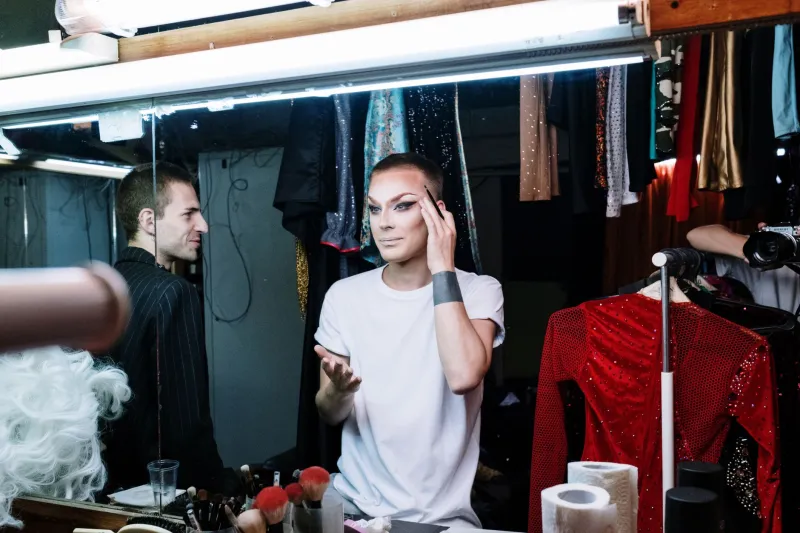
Beauty competitions in America have always been, at their core, exercises in cultural definition. They do not merely celebrate what a society finds attractive — they actively construct and reinforce it. For most of the twentieth century, that construction was remarkably consistent: thin, typically white, conventionally feminine, and narrowly conceived in ways that excluded the vast majority of women from ever seeing themselves reflected in the winner's circle.
Transgender pageantry is something different. It is not simply a parallel system that replicates traditional competitions with a different cast of participants. It is, in the most genuine sense of the phrase, a reimagining of the entire enterprise.
The Mythology of "Traditional" Beauty
To understand what transgender pageantry is challenging, it helps to examine what it is challenging against. The notion of "traditional beauty standards" in American competition culture is often invoked as though it were a natural phenomenon — something timeless and self-evident rather than constructed and contested.
In reality, those standards have always been political. They have been used to exclude, to rank, and to enforce conformity. The history of mainstream American pageantry is inseparable from histories of racial segregation, body policing, and the systematic marginalization of anyone whose appearance deviated from a very specific and very limited ideal.
When critics of transgender pageantry invoke tradition, they are, knowingly or not, invoking that history. What Miss Trans Star International and competitions like it represent is not an attack on beauty — it is an attack on the gatekeeping that has always accompanied it.
Diversity as Design, Not Afterthought
One of the most striking features of transgender pageant culture is the degree to which diversity is structural rather than cosmetic. In mainstream competitions, diversity initiatives often feel grafted onto existing frameworks — a broader range of skin tones here, a slightly wider size range there — while the underlying architecture of judgment remains largely unchanged.
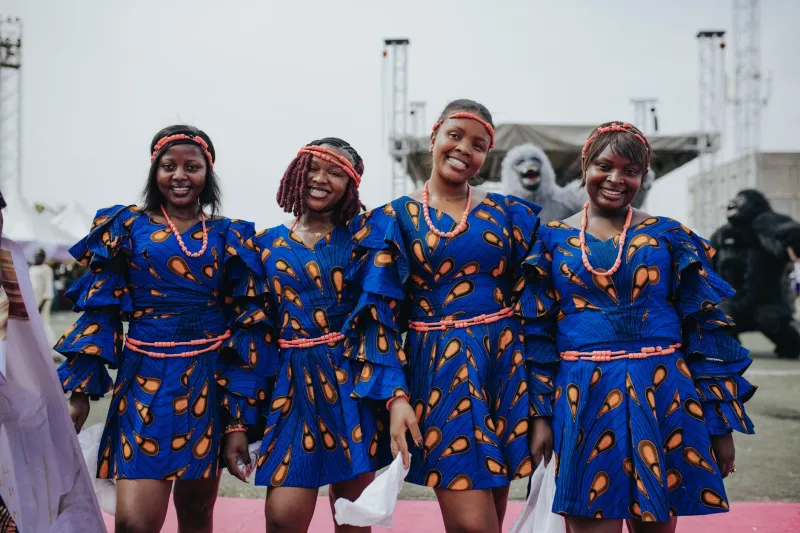
In transgender pageantry, the framework itself is different. Competitions like Miss Trans Star International are built around the recognition that transgender women come from every racial background, every body type, every socioeconomic circumstance, and every point on the spectrum of gender expression. The judging criteria must, by necessity, accommodate that range.
This is not merely a philosophical position. It has practical consequences for what gets celebrated on stage. Competitors are not measured against a single silhouette or a single presentation style. Elegance can look like many things. Grace can be expressed in many registers. The woman who wins is not the one who most closely approximates a predetermined ideal — she is the one who most fully and authentically embodies her own.
The Authenticity Imperative
If there is a single value that distinguishes transgender pageant culture from its mainstream counterpart, it is the premium placed on authenticity. This makes a certain intuitive sense: transgender women have, in many cases, spent years — sometimes decades — navigating a world that demanded they conceal or suppress fundamental aspects of who they are. The pageant stage becomes a space where that suppression is not only unnecessary but actively unwelcome.
Judges at Miss Trans Star International are not looking for women who have successfully conformed to an external standard. They are looking for women who have done the harder and more meaningful work of discovering and presenting their truest selves. The distinction matters enormously, both for the competitors and for the audiences who watch them.
There is something genuinely radical about a competition that asks its participants to be more themselves rather than less. In an entertainment culture that has historically profited from asking women to diminish, hide, and perform, that inversion carries real cultural weight.
Reshaping the Audience's Eye
Beauty, as any aesthetician will tell you, is not a fixed perception. It is a trained one. We learn to see beauty in certain configurations because those configurations have been repeatedly presented to us as worthy of admiration. The corollary is equally true: we can learn to see beauty differently if we are exposed to different configurations with sufficient frequency and framing.
This is where transgender pageantry performs some of its most significant cultural work. Every Miss Trans Star International competition is an exercise in expanding the visual vocabulary of beauty for everyone in the room — and, increasingly, for the digital audiences who follow along through social media and online coverage.
When a transgender woman of color walks the stage with the kind of commanding presence that stops conversation, when a plus-size competitor delivers a talent performance that brings the audience to its feet, when a woman in her forties or fifties is celebrated for the depth and complexity of her presentation rather than penalized for failing to approximate youth — each of these moments does something to the way the audience sees. It shifts the frame, however slightly, and those shifts accumulate.
A New Standard Bearer
The cultural conversation around beauty in America is changing. Slowly, unevenly, and with significant resistance, but changing nonetheless. Mainstream pageants are under pressure to evolve. Advertising and fashion industries are, however imperfectly, broadening their representations of femininity. The audiences, particularly younger Americans, are increasingly skeptical of beauty frameworks that feel exclusionary and artificial.
Transgender pageantry is not simply riding this wave — it is, in important ways, generating it. The inclusive frameworks developed within trans-focused competitions are demonstrating, with remarkable clarity, that beauty celebrations do not require narrow standards to be meaningful. They can be more compelling, more emotionally resonant, and more culturally relevant precisely because they refuse to exclude.
At Miss Trans Star International, we do not position ourselves as the antithesis of beauty competition. We position ourselves as its evolution. The women who compete on our stage are not rejecting the tradition of celebrating femininity, grace, and achievement. They are insisting that those qualities belong to all women — and that the stage is large enough to hold every one of them.
That is not a revolution against beauty. It is beauty, finally given room to breathe.