Sovereign and Scarred: How Transgender Pageant Queens Are Redefining Beauty Through Radical Honesty

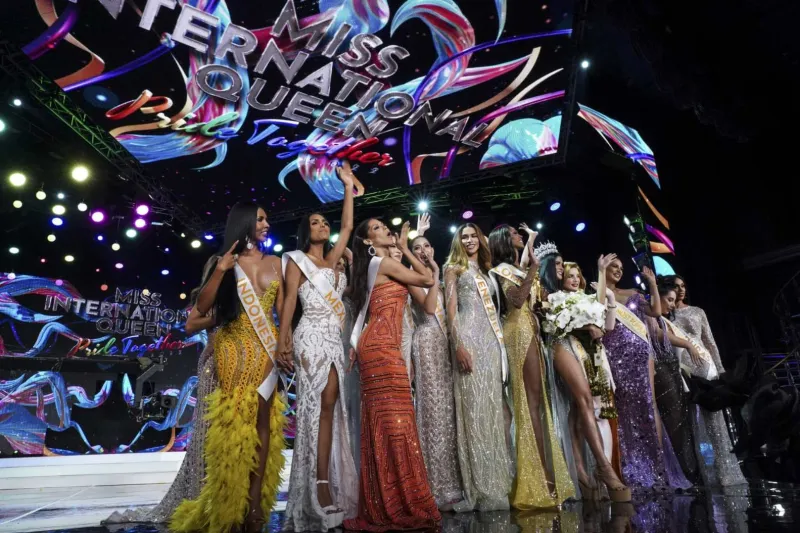
Photo: confident transgender woman in elegant gown on stage under spotlight, via www.theworlds50best.com
Beauty pageantry has always trafficked in ideals. For most of its American history, the competitive stage has been a space where imperfection was managed, minimized, and, wherever possible, erased before the lights came up. The rules of presentation were largely unspoken but universally understood: conceal what does not conform, project what the judges expect, and construct a surface that leaves no trace of struggle.
For transgender competitors, those rules carried a particular weight. The pressure to present a seamlessly "finished" version of oneself — to offer a body that betrayed no evidence of the medical, emotional, and social journey underlying it — was not merely aesthetic convention. It was, for many, a survival instinct carried from a world that had taught them their authentic bodies were subjects of shame rather than celebration.
That calculus is changing, and the stage is where the change is most visible.
The Deliberate Reveal
Across regional and national trans pageant circuits throughout the United States, a discernible shift is underway. Competitors are arriving at competition with their scars uncovered — chest reconstruction lines visible in swimwear segments, breast augmentation scars unmasked beneath evening gowns cut to expose rather than conceal, stretch marks left undisguised and unapologized for. In interview segments, these same competitors are speaking about their bodies with a frankness that would have been unthinkable on competitive stages even five years ago.
This is not accidental exposure. It is a studied, intentional strategy — one that several competitors describe as the most consequential decision they made in their preparation.
"I spent two years competing and covering everything," shared one titleholder from the Southeast who has since gone on to compete at the international level. "I was technically proficient. My walk was strong, my answers were polished. And I kept placing second or third. The year I stopped hiding was the year I won. I don't think that's a coincidence."
Judges who have evaluated competitors across multiple circuits describe a similar pattern. There is a quality of presence — a groundedness, a lack of internal conflict — that manifests visibly when a competitor is not expending energy on concealment. It reads as confidence, but it is something more specific than that. It is coherence.
A Challenge to the Pageant Canon
To understand the full weight of this shift, it is necessary to appreciate how deeply the concealment imperative is embedded in traditional pageant culture. American beauty pageantry evolved within a cultural framework that equated feminine beauty with a specific, narrow set of physical characteristics — characteristics that were implicitly unmarked by labor, age, illness, or struggle. The body presented on stage was meant to suggest effortlessness, as though beauty of that caliber simply arrived without cost.
For transgender women, that framework was doubly exclusionary. Not only were their bodies held to the same impossible standard applied to all competitors, but they carried the additional burden of a cultural narrative that framed transition itself as something to be minimized or explained away rather than honored.
The competitors now choosing radical visibility are, in the most direct sense, rejecting that framework wholesale. They are asserting that a body shaped by the deliberate, courageous process of becoming oneself is not a compromised version of beauty — it is a more complete one.
"My scars are not evidence that something went wrong," said one competitor from the Midwest who wore a gown specifically designed to frame rather than hide her surgical lines during her most recent competition. "They are evidence that something went exactly right. I fought for this body. I earned it. Why would I cover it?"
The Psychology of Visible Resilience
Behavioral researchers who study self-presentation and social perception have long documented what is sometimes called the "scar narrative effect" — the phenomenon whereby visible physical markers of survival, when presented with confidence and contextual framing, tend to increase rather than decrease an observer's assessment of a person's strength and credibility.
Within the specific cultural context of transgender pageantry, this effect appears to be amplified. Audiences at trans pageant events tend to bring a sophisticated understanding of what transition involves — many have lived versions of that experience themselves, or have supported loved ones through it. When a competitor displays her physical journey openly, she is not asking that audience to make a conceptual leap. She is offering them recognition, and recognition, in a community built on the experience of being unseen, is profoundly powerful.
Coaches working with trans competitors at the national level describe a growing awareness of this dynamic in how they structure preparation. The conversation has shifted from "how do we present this competitor's body" to "how do we help this competitor tell her body's story."
When Vulnerability Becomes a Competitive Instrument
It would be a disservice to this movement to frame it purely in strategic terms. The competitors leading this shift are not primarily motivated by a calculation about competitive advantage. They are, by and large, motivated by exhaustion — exhaustion with the performance of concealment, with the energy cost of managing a presentation that does not match an interior truth.
And yet the competitive results are real. Across multiple pageant circuits, competitors who have embraced visible authenticity are winning at rates that are difficult to attribute to coincidence. Something about the wholeness of their presence — the absence of the subtle internal fragmentation that concealment produces — is landing with judges and audiences in ways that technically flawless but emotionally guarded performances do not.
This is perhaps the most elegant argument for what these competitors are doing: authenticity, it turns out, is not the enemy of excellence. In the hands of a transgender woman who has fought for every inch of herself, it may be the most potent competitive tool available.
What This Means for the Future of the Stage
The implications of this movement extend well beyond competitive outcomes. As more trans competitors choose radical visibility and as those competitors achieve increasing success, they are collectively rewriting the aesthetic grammar of the pageant stage itself.
For younger competitors watching from the audience or the wings, the message is unambiguous: your body, exactly as it is, is a valid body for this stage. The scars you carry are not disqualifications. They are credentials.
That message, delivered repeatedly from the most visible platform in trans pageantry, has the power to reshape not just how competitors present themselves, but how an entire community understands the relationship between beauty and truth.
The crown, it seems, was always waiting for someone brave enough to arrive without a mask.