Lights, Camera, Crown: How Regional Trans Pageants Have Become Hollywood's Most Overlooked Talent Incubators
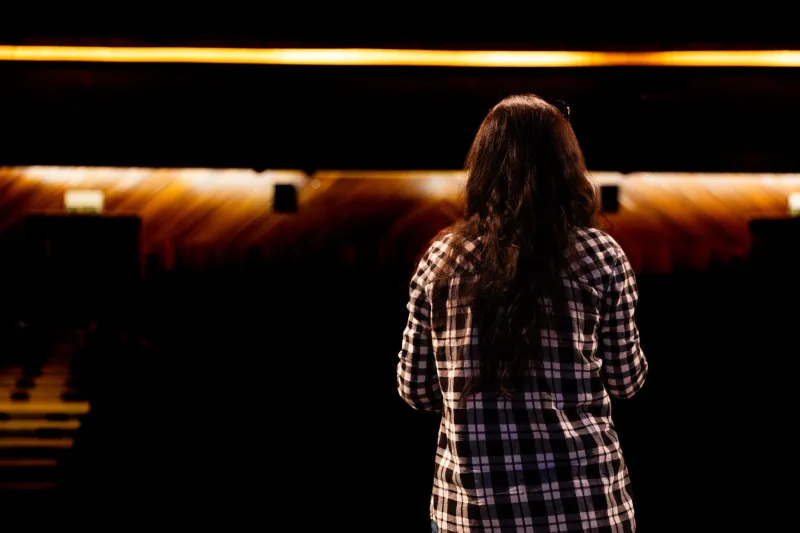
The ballroom in a mid-sized hotel in Atlanta does not look like a Hollywood audition. The sequins are brighter, the stakes feel more personal, and the audience is anything but passive. Yet somewhere near the back of the room, clipboard in hand, sits a television casting associate whose production company is currently developing a reality competition series for a major streaming platform. She is not here by accident.
"I stopped wasting time on conventional open calls two years ago," she explains, requesting anonymity to protect her competitive advantage. "What I find here — the composure under pressure, the ability to command a room, the genuine narrative depth these women carry — I cannot manufacture that in a casting booth."
This scene, once an anomaly, is becoming a recognizable feature of the regional transgender pageant circuit across the United States. Quietly and with increasing deliberateness, entertainment industry professionals are integrating these competitions into their talent scouting calendars. The implications for transgender visibility in mainstream media are profound.
The Audition No One Announced
Pageant stages have always functioned as proving grounds. Contestants develop interview technique, refine their stage presence, practice delivering a coherent personal narrative under the unforgiving scrutiny of judges and audiences simultaneously. For transgender women, many of whom have navigated extraordinary personal journeys before ever setting foot on a stage, the storytelling dimension carries particular weight.
Denise Vásquez, who has organized regional pageants in the Southwest for over a decade, says she began noticing unfamiliar faces in her audiences roughly three years ago. "They weren't family, they weren't community. They were watching differently — analytically. I started asking questions and realized these were people from production companies, from documentary teams, from digital media brands."
Vásquez now formally communicates with several entertainment contacts ahead of her competitions, providing contestant bios and, with permission, headshots. "It became clear that what we were doing organically aligned with what they needed professionally. The infrastructure was already there. We just needed to acknowledge it."
What Casting Directors Are Actually Looking For
Marcellus Horne, a Los Angeles-based casting producer with credits across documentary, reality, and scripted formats, describes the pageant circuit as offering something increasingly rare in a media landscape saturated with self-produced content: unmediated authenticity.
"Social media has trained a generation of performers to be compelling in fifteen-second increments," Horne says. "But when you need someone to hold a scene for three minutes, to answer an unexpected question without a script, to be present and emotionally available and still technically watchable — that requires a different kind of training. Pageant competitors have that training."
Horne points specifically to the interview segment of most transgender pageant formats as a direct analog to on-camera performance. "The questions are often pointed. The time is limited. The pressure is real. A contestant who can articulate her identity, her platform, her vision with clarity and grace in that environment is, from my perspective, already audition-ready."
Beyond the interview, he notes that stage walking, posture, the management of costuming and presentation, and the ability to emote authentically while maintaining technical performance awareness all translate directly to on-camera work. "These women are not learning pageantry in isolation. They are learning performance craft."
Queens Who Made the Leap
The pipeline is already producing results. Several alumnae of regional and national transgender pageant circuits have transitioned — deliberately and professionally — into entertainment careers, with their pageant visibility serving as the initial point of industry contact.
One such competitor, a former regional titleholder from the Mid-Atlantic circuit who now works as a recurring on-camera contributor for a nationally distributed lifestyle program, describes her trajectory with characteristic directness. "A producer reached out to me three weeks after my competition. She had been in the audience. She said she wanted someone who could speak about transgender wellness without it feeling like a public service announcement. She said I had that quality on stage."
The transition was not instantaneous. There were months of screen tests, coaching sessions, and contract negotiations. But the initial contact — the moment the pipeline opened — originated entirely from her pageant performance.
"I had spent years preparing for that stage," she reflects. "I did not know I was also preparing for a camera. But looking back, the skills are inseparable."
The Organizer's New Responsibility
As the entertainment industry's interest in pageant talent grows more explicit, competition organizers find themselves navigating a new layer of professional responsibility. The question of how to protect contestants from exploitative industry contact while simultaneously facilitating legitimate opportunity has become a genuine operational concern.
Vásquez has responded by developing a formal consent protocol. "Every contestant is now asked, during registration, whether they are open to being contacted by entertainment industry professionals who may attend the event. If they say no, that preference is communicated to any industry contacts we have a relationship with. If they say yes, we facilitate introductions — but we do not share personal information without direct consent."
This approach reflects a broader maturation in how pageant organizers conceptualize their role. The competition itself remains the central purpose. But the recognition that competitions exist within a larger professional ecosystem — one that can deliver genuine career advancement to participants — demands a more deliberate organizational posture.
Horne endorses the approach. "The last thing any serious producer wants is to be perceived as exploiting a community event for free talent discovery. Formalizing the relationship protects everyone. It also signals to the industry that these organizations are sophisticated partners, not just community gatherings."
Building the Infrastructure of Visibility
For the regional pageant circuit to function as a durable talent pipeline rather than an occasional discovery mechanism, infrastructure matters. Several organizers are now investing in professional-quality video documentation of their competitions, creating searchable archives that extend the reach of any given performance far beyond the original audience.
Some have begun partnering with media training professionals to offer pre-competition workshops that explicitly address on-camera technique alongside traditional pageant preparation. The result is a contestant who arrives on stage prepared not only to compete for a crown but to be seen — genuinely and professionally seen — by whoever may be watching.
For the transgender women who walk these stages, the convergence of pageantry and entertainment opportunity represents something larger than career advancement. It represents the expansion of a narrative. Every casting director who fills a seat in a regional ballroom is, implicitly, acknowledging that the stories being told on that stage deserve a wider audience.
"We have always known our stories were worth telling," says Vásquez. "The rest of the world is catching up."
The crown, it turns out, was never just a crown. For a growing number of transgender women across the United States, it has become the first frame of a much longer story — one that Hollywood is only beginning to learn how to tell.