The Architects of the Crown: Meet the Unseen Professionals Who Build Transgender Pageantry From the Ground Up
When a titleholder takes her final walk, the audience sees sequins catching light, a walk tuned to the precise tempo of the music, a face that reads from the back of a thousand-seat auditorium. What the audience does not see is the seamstress who rebuilt the gown's boning structure at midnight three days before the event, the choreographer who spent six weeks drilling that walk until it became instinct, or the photographer who arrived at the venue four hours before doors opened to map every angle of available light.
Transgender pageantry in America has produced not only extraordinary competitors but an equally extraordinary support ecosystem — a network of highly skilled professionals who have developed specialized expertise that no mainstream beauty school or event management program ever taught them. Their work is invisible by design. Their contribution is immeasurable.
The Makeup Artists Who Rewrite the Rules
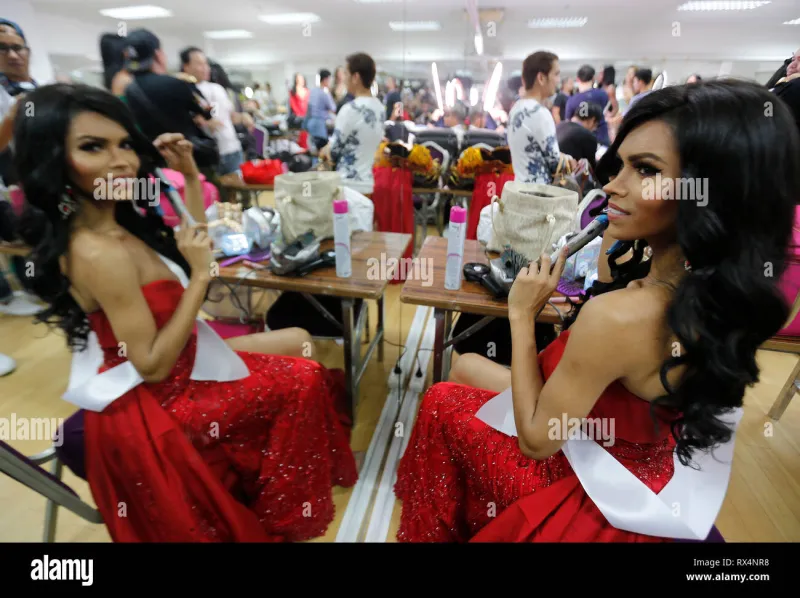
Makeup artistry for transgender pageant competitors requires a technical vocabulary that extends well beyond conventional beauty training. Working with competitors across a wide spectrum of transition timelines, facial structures, and skin considerations demands improvisation, anatomical knowledge, and an intimate understanding of stage lighting physics that most commercial makeup artists never acquire.
Veteran trans pageant makeup artists describe their craft as part science, part portraiture, and part emotional labor. "You are not just creating a look," explains one Chicago-based artist who has worked with multiple Miss Trans Star International competitors. "You are helping someone see herself, often for the first time in a way that matches what she carries inside. That is not a cosmetic transaction. That is something else entirely."
The technical demands are formidable. Stage lighting at pageant venues can be brutally unforgiving, flattening dimensionality and washing out undertones in ways that require aggressive compensation in product choice and application technique. Trans pageant makeup artists have developed proprietary approaches to contouring, highlight placement, and color correction that are now quietly influencing mainstream editorial makeup, even as their originators go uncredited.
Costume Designers and the Architecture of Belonging
If makeup artists work at the level of the face, costume designers work at the level of identity itself. The gowns, swimwear, and activewear that trans pageant competitors wear are not merely garments — they are structural arguments about who these women are and how they deserve to be seen.
Designing for trans pageant competitors requires confronting every assumption that mainstream fashion construction makes about the female body. Standard pattern drafting, shoulder-to-hip ratios, boning placement, and hemline calculations are all predicated on cisgender female measurements. Trans competitors — particularly those earlier in their transition journeys — require custom structural solutions that mainstream bridal and formalwear industries have neither the training nor the incentive to develop.
The designers who have filled this gap have done so through years of trial, error, client collaboration, and genuine creative innovation. Many began as hobbyists or community volunteers before the demand for their skills grew into full professional practices. Today, several trans-specialized costume designers maintain six-month waitlists and have built reputations that extend well beyond the pageant circuit into television, film, and high-fashion editorial work.
Choreographers Who Teach Women to Own Space
The walk is, in many respects, the signature of a pageant competitor — the physical expression of sovereignty, confidence, and presence that no interview answer or evening gown can fully replace. Teaching that walk to trans competitors involves dimensions that mainstream pageant choreography never addresses.
Trans pageant choreographers work at the intersection of movement science, gender identity psychology, and performance coaching. Many of their clients arrive having spent years actively suppressing the physical expressiveness that now, on a pageant stage, they are being asked to amplify. Undoing that suppression — helping a competitor trust her body to move with full confidence and intentionality — is delicate, patient work.
"The technical part is actually the easier part," says one New York-based choreographer who has prepared competitors for national trans pageant titles. "The harder work is helping someone believe that she is allowed to take up space. That she deserves to be seen. Once that belief is there, the walk follows naturally."
Event Coordinators and the Logistics of Celebration
Behind every successful transgender pageant is an event coordinator who has solved problems that no event management textbook ever anticipated. Venue accessibility for trans competitors and attendees, security protocols that protect participants from potential hostility, media management that balances visibility with competitor safety, and vendor coordination across a community that prizes discretion — these are the operational realities of trans pageant production.
Many trans pageant event coordinators entered the field through community organizing rather than traditional event management pipelines. Their expertise is hard-won and highly specific. They know which hotel properties in which cities can be trusted to treat trans guests with dignity. They know how to brief security staff in ways that prevent the kind of misgendering incidents that can derail an entire competition weekend. They know how to build backstage environments that function as sanctuaries rather than pressure cookers.
Building an Economy, Not Just an Event
Collectively, the professionals who support transgender pageantry have constructed something more significant than a service sector. They have built an economic ecosystem rooted in community trust, specialized knowledge, and creative excellence — one that sustains livelihoods, develops careers, and generates cultural value that extends far beyond any single competition.
Miss Trans Star International recognizes that the crown is always a collaborative achievement. The titleholder who stands in the spotlight does so because dozens of skilled, dedicated professionals made her moment possible. It is long past time that their artistry received the recognition it has always deserved.